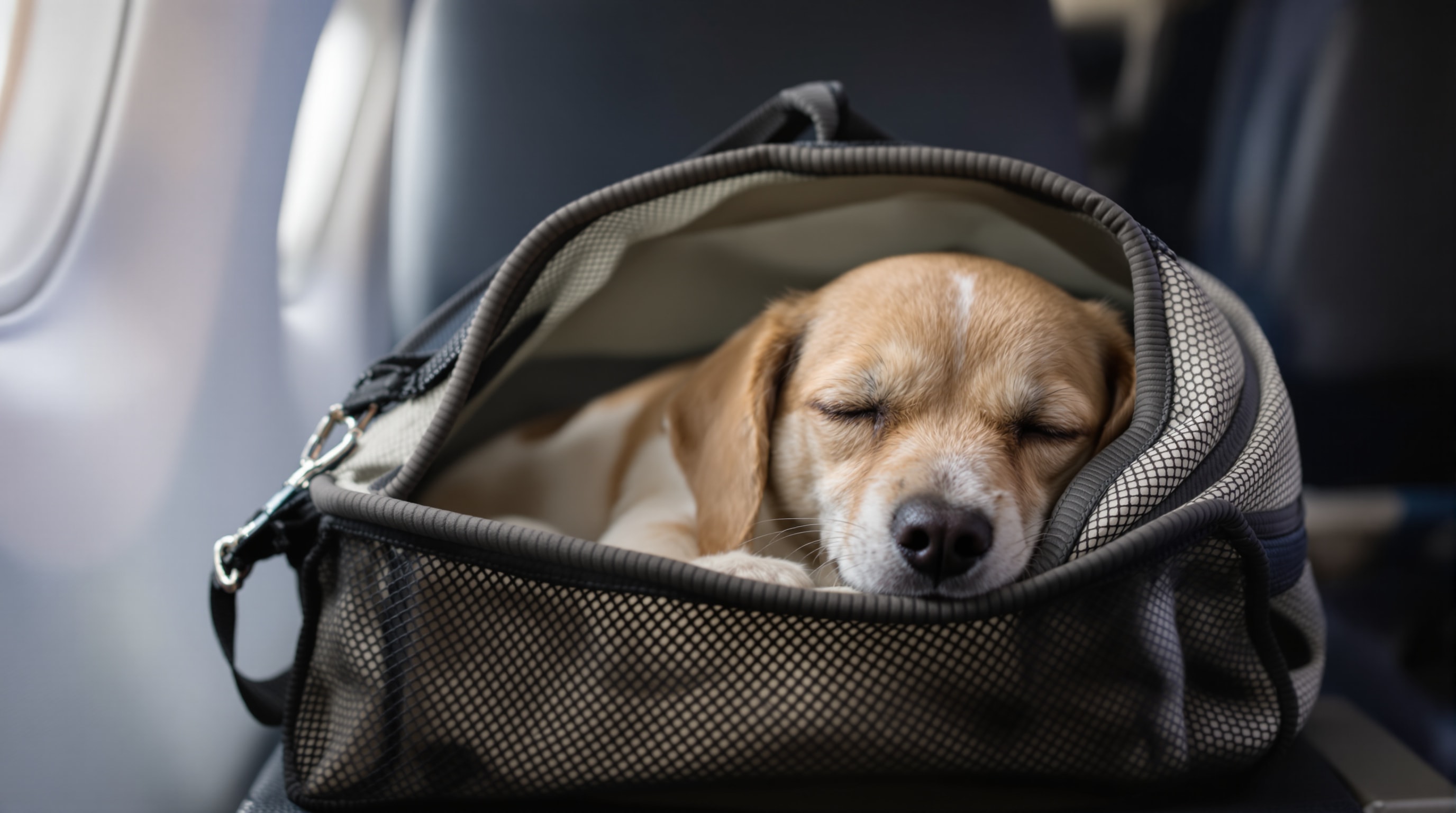
A well-prepared dog in a properly selected carrier can travel in-cabin with minimal stress.
Flying internationally with a dog takes preparation, patience, and a thorough understanding of both airline policies and your dog's individual temperament. This guide covers the practical decisions you'll face — from carrier selection to airport logistics — and gives you a realistic picture of what to expect on travel day.
In-Cabin vs. Cargo: The Critical Decision
The most significant decision for air travel with a dog is whether your pet travels in the cabin with you or in the cargo hold. This is determined primarily by your dog's size, though airline policy and your destination country's import rules also play a role.
In-Cabin Travel
Generally available for dogs whose carrier fits under the seat in front of you (typically dogs under 7-10kg/15-20lbs depending on the airline). Advantages include:
- You can monitor your dog throughout the flight
- Your dog experiences the same cabin temperature as passengers
- No risk of mishandling in the cargo hold
Cargo Travel
Required for larger dogs, cargo travel has become controversial in recent years following incidents involving pet welfare. If cargo is your only option:
- Choose airlines with documented pet welfare programs
- Book direct flights where possible — transfers increase risk
- Travel in mild weather seasons when temperature extremes are less likely
- Ensure your dog is comfortable and familiar with their crate well before travel
- Attach clear identification inside and outside the crate including your international contact number
Choosing the Right Carrier
For in-cabin travel, the carrier is one of the most important investments you'll make. Key considerations:
- Airline approval – Verify your specific carrier meets your airline's approved dimensions before purchasing
- Ventilation – Multiple mesh panels on at least two sides ensure adequate airflow
- Structure – Semi-rigid carriers provide better protection and maintain their shape under the seat
- Familiarity – Begin having your dog sleep and spend time in the carrier weeks before the flight to reduce travel-day anxiety
Crate Training for Cargo Travel
For dogs traveling in the cargo hold, IATA-approved hard-sided crates are required. Begin crate training at least 4-6 weeks before travel:
- Introduce the crate with the door open and comfortable bedding inside
- Feed meals near, then inside, the crate
- Practice short crating periods (15 minutes) with the door closed
- Gradually extend crating periods to the duration of your planned flight
- Perform trial runs during car trips to simulate travel conditions
Managing Flight Anxiety
Some dogs are naturally calm travelers; others experience significant anxiety. Speak with your veterinarian well before your trip about anxiety management options. Anti-anxiety medications have become more commonly prescribed for pet air travel, but they must be tested in advance to confirm your dog responds well to the dosage.
The AVMA's guidance on traveling with pets advises against sedation for air travel in most cases, as sedation can increase a pet's risk of injury and health problems — consult your vet about safer alternatives.
On Travel Day
- Limit food before the flight – Feed your dog 4-6 hours before departure to reduce the risk of nausea
- Offer a final bathroom break – Walk your dog immediately before entering the terminal
- Arrive early – Traveling with a pet requires additional check-in steps; budget extra time
- Keep arrivals calm – When you arrive at security and your destination, handle your dog calmly and confidently — your energy communicates directly to them
- Have documents ready – Health certificate, vaccination records, and import permits should be immediately accessible, not buried in checked luggage
For EU arrivals from non-EU countries, a travellers' point of entry normally handles document and identity checks. Keep your dog's records accessible there. For journeys from Great Britain, GOV.UK's EU travel guidance gives an animal health certificate 10 days after issue for EU entry, six months for onward EU travel and six months for re-entry to Great Britain. If the rabies vaccination expires during the trip, the certificate cannot cover onward travel or re-entry. Plan its issue date around arrival. Our guide to taking your dog to Great Britain and the EU sets out the timing in order.
For the full picture on international pet travel paperwork and destination requirements, see our International Pet Travel Guide.