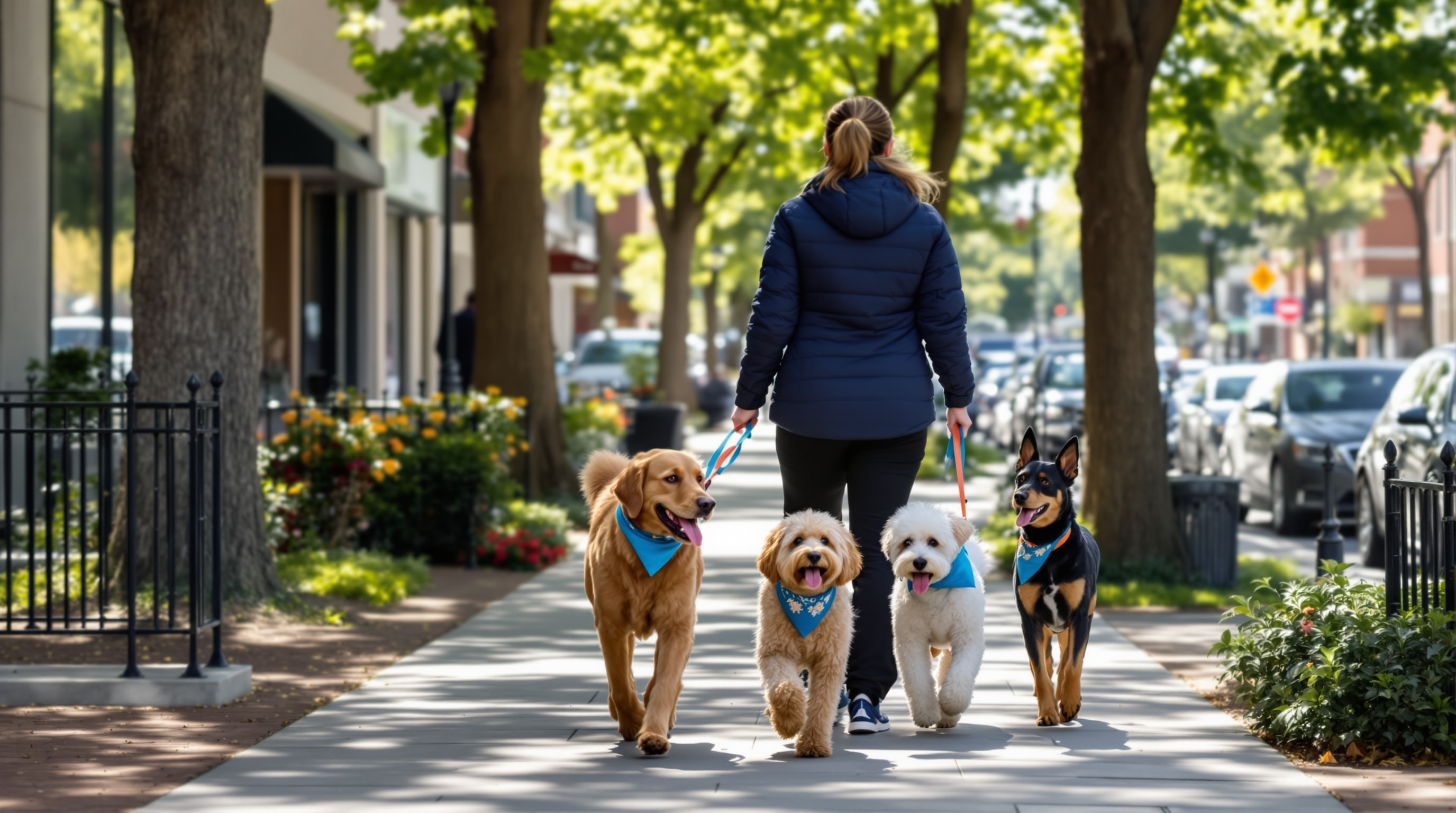
A professional dog walker and sitter manages multiple responsibilities beyond just walking.
If you've never hired a professional dog sitter before, you might have a vague idea that they "watch the dog" — but the scope of professional pet sitting is considerably broader than that. Understanding what a qualified sitter actually does helps you evaluate candidates, set appropriate expectations, and recognize when a sitter is going above and beyond.
Core Services a Pet Sitter Provides
Most professional dog sitters offer some combination of the following services, though the specific package depends on the individual and their business model:
In-Home Pet Sitting
The sitter comes to your home on a scheduled basis — or stays overnight — to provide care in your dog's familiar environment. Services typically include feeding, watering, exercise (walks or yard time), medication administration if required, cleaning up after the dog, and reporting to you on the pet's condition and behavior.
Drop-In Visits
Shorter scheduled visits (typically 30-60 minutes) to check in on your dog, provide meals and water, and offer brief companionship and exercise. Common for shorter absences or as a complement to a neighbor's help.
Overnight Stays
The sitter sleeps in your home, providing continuous overnight supervision. Particularly valuable for dogs with separation anxiety, senior dogs, dogs recovering from surgery, or any pet that doesn't do well alone for long stretches.
Dog Walking
Many pet sitters also offer standalone dog walking — scheduled walks during daytime hours. For owners traveling long-term, this is often combined with drop-in visits or overnight stays.
Travel isn't the only reason owners book a regular walker. Busy work schedules are a common one, and so is the owner's own mobility — a dog's daily walks are often the first routine to slip when knee or hip trouble makes long outings difficult. Owners in that situation, including those consulting a clinic about non-surgical joint pain relief, frequently rely on a professional walker to keep the dog's exercise schedule consistent in the meantime. The American Kennel Club's exercise guidance is a useful reference for how much daily activity dogs of different ages and breeds actually need.
What a Professional Sitter Takes Responsibility For
A responsible professional pet sitter will take on meaningful accountability for your dog's welfare, including:
- Health monitoring – Watching for changes in behavior, appetite, energy levels, or physical condition that might indicate illness
- Emergency response – Having a clear protocol for veterinary emergencies, ideally including your vet's contact information, authorization to seek emergency care, and a pre-approved spending limit
- Routine maintenance – Maintaining your dog's normal feeding schedule, walk times, and play routine as closely as possible to minimize disruption
- Communication – Regular check-ins (photos, messages, video calls for longer stays) so you stay informed and reassured from abroad
- Home security basics – For in-home sitters, this includes locking doors, managing lights, collecting mail, and basic home security during your absence
What Is Outside a Sitter's Scope
Professional pet sitters are not veterinarians. They should:
- Administer prescribed medications as instructed (with proper documentation) but not make medical decisions
- Recognize signs of distress or illness and contact you and your vet — not diagnose or treat conditions
- Follow your established training protocols but not attempt to introduce new training methods
The ASPCA's general pet care guidelines are a useful reference to share with any sitter regarding baseline health and welfare standards.
What Professional Pet Sitting Looks Like Day to Day

A typical day for a professional in-home dog sitter might look like this:
- 7:00 AM – Morning walk (30-45 minutes), feeding, fresh water
- 9:00 AM – Photo or brief message to the owner; any notes on the dog's overnight behavior
- 12:00 PM – Midday check-in walk or yard time
- 5:30 PM – Evening walk, feeding, medication if applicable
- 8:00 PM – Evening update to owner; settle dog for the night
This structure varies significantly based on the dog's needs, your instructions, and the sitter's approach. Discuss daily schedules explicitly during the booking process. See our guide to choosing a pet sitter for the right questions to ask.